Pisces Masters of the Art World
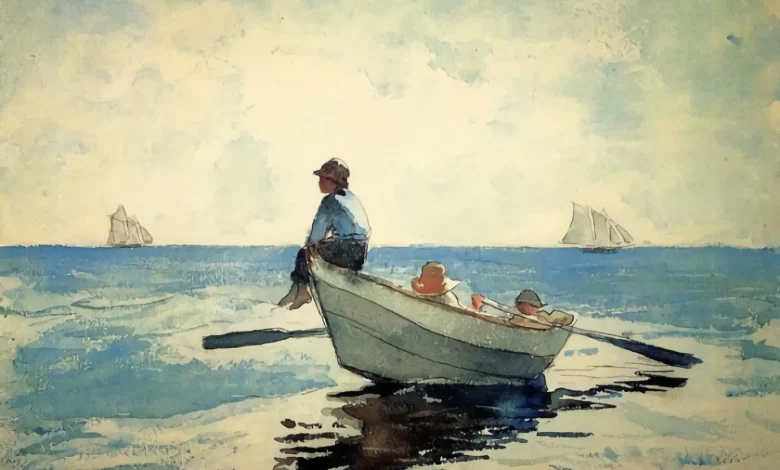
Pisces, a zodiac sign whose emotional landscape resembles an intricate tapestry, is painted with profound depth and vibrant hues. Their emotional capacity mirrors the vast ocean—seemingly boundless, with tears flowing freely whether in moments of anger, joy, debate, or reflection. This sensitivity and emotional richness are not just traits; they are the very essence that makes Pisces natural-born artists.
Guided by intuition rather than confined by artificial constructs, Pisces creators produce works that transcend reality, imbued with spirituality and depth. Their art, much like their emotions, is layered with meaning and feeling, inviting viewers into their inner worlds. The boundless creativity and imagination of Pisces artists allow us to glimpse alternative perspectives on humanity’s complexity and beauty.
1. Michelangelo
Birthdate: March 6, 1475
Widely regarded as one of the greatest artists of the High Renaissance, Michelangelo was often referred to as Il Divino (“the divine one”) during his lifetime. His unparalleled artistic genius continues to inspire awe centuries later. Masterpieces such as the Pietà (1498–1499) in St. Peter’s Basilica and the monumental Last Judgment (1534–1541) fresco exemplify his ability to blend technical mastery with deep emotional and spiritual expression.
2. Piet Mondrian
Birthdate: March 7, 1872
As a pioneer of 20th-century abstract art, Mondrian evolved from figurative painting to a style reduced to basic geometric elements. His work pursued utopian ideals and universal aesthetics. In 1914, he declared, “Art is higher than reality and has no direct relation to reality. To approach the spiritual in art, one will make as little use as possible of reality, because reality is opposed to the spiritual.” Works like Spring Sun: Castle Ruin (1909) and View from the Dunes with Beach and Piers (1909) mark his journey toward abstraction.
3. Pierre-Auguste Renoir
Birthdate: February 25, 1841
A founding member of the Impressionist movement, Renoir was a more complex and contemplative painter than often perceived. After 1877, he distanced himself from the group, developing a classical, monumental style that influenced avant-garde masters like Pablo Picasso. Iconic works such as Portrait of Irène Cahen d’Anvers (1880) and Dance at Le moulin de la Galette (1876) showcase his ability to capture light, movement, and emotion.
4. Kazimir Malevich
Birthdate: February 23, 1879
Malevich’s groundbreaking work and writings profoundly shaped abstract art in the 20th century. His concept of Suprematism sought to create art free from natural forms, striving for the “supremacy of pure feeling” and spirituality. Pieces like Grinder (1912) and Suprematism (1915) visualize his theories, which he elaborated in manifestos such as From Cubism and Futurism to Suprematism (1915).
5. Constantin Brâncuși
Birthdate: February 19, 1876
Often hailed as the father of modern sculpture, Brâncuși was among the most influential sculptors of the 20th century. Rejecting realism, he carved directly from wood or stone, preferring evocation over imitation. His sculptures, such as Bird in Space (1932–1940) and Mademoiselle Pogany (1912), were often displayed on simple bases or even directly on the floor, integrating art into everyday life.
6. Zdzisław Beksiński
Birthdate: February 24, 1929
This renowned Polish painter and photographer specialized in dystopian fantasy art. Beksiński described his style as baroque and gothic. His early period featured expressionistic, surreal apocalypses, while his later work embraced abstraction and formalism. Untitled works from 1984 exemplify his haunting, intricate visions.
7. Anselm Kiefer
Birthdate: March 8, 1945
Born in the final months of World War II, Kiefer grapples with Germany’s postwar identity and historical myths. His work merges painting, sculpture, literature, and epic themes of life, death, and the cosmos. Pieces like The Language of the Birds (2013) and Morgenthau Plan (2013) reflect his vast, media-rich explorations.
8. Balthus
Birthdate: February 29, 1908
A reclusive painter, Balthus created tense, unsettling narrative scenes. Avoiding avant-garde movements, he drew inspiration from classical masters like Piero della Francesca. His 1934 Paris exhibition shocked audiences with its voyeuristic depictions of adolescent subjects. Works such as Therese Dreaming (1938) and Thérèse (1938) frame his mysterious, subversive style.
9. Josef Albers
Birthdate: March 19, 1888
Albers was one of the most influential artists and educators of 20th-century America. As head of the design department at Yale, he shaped modern graphic design and color theory. His book, Interaction of Color (1963), remains a seminal work. Albers was also a prolific abstract painter, best known for his Homage to the Square series.
10. Tang Yin (Tang Bohu)
Birthdate: March 6, 1470
A master of the Ming Dynasty, Tang Yin was celebrated as one of the “Four Masters of Wu.” His work blended northern and southern Chinese painting styles, characterized by elegant brushwork, balanced compositions, and poetic subtlety. He excelled in figure painting, landscapes, and bird-and-flower subjects, as seen in works like Spring Mountain with Companions and Pine Sounds in Mountain Valleys.
11. Pan Tianshou
Birthdate: March 14, 1897
Renowned for his bold, expressive ink paintings, Pan Tianshou specialized in birds, flowers, and landscapes. His compositions balance risk and harmony, conveying profound meaning with minimal strokes. Masterpieces like Corner of Little Dragon Pool (1963) and Pine and Rock (1960) demonstrate his dynamic style and spiritual depth.
These Pisces artists, through their sensitivity, intuition, and boundless imagination, have left an indelible mark on the art world. Their works remind us that art is not just a representation of reality but a gateway to the spiritual and the sublime.